Pilates includes exercises focused on control, breathing, mobility, and strength. People new to the method will commonly encounter two options: a Pilates Matwork class or a Reformer class.
Using a machine does not automatically make a class advanced: both Matwork and Reformer can be adapted to different levels through exercise selection and instructor guidance.
In this article, we will explore the key differences between the two modalities, the specific benefits, and how to choose the right class for your experience level.
What is Pilates Matwork?
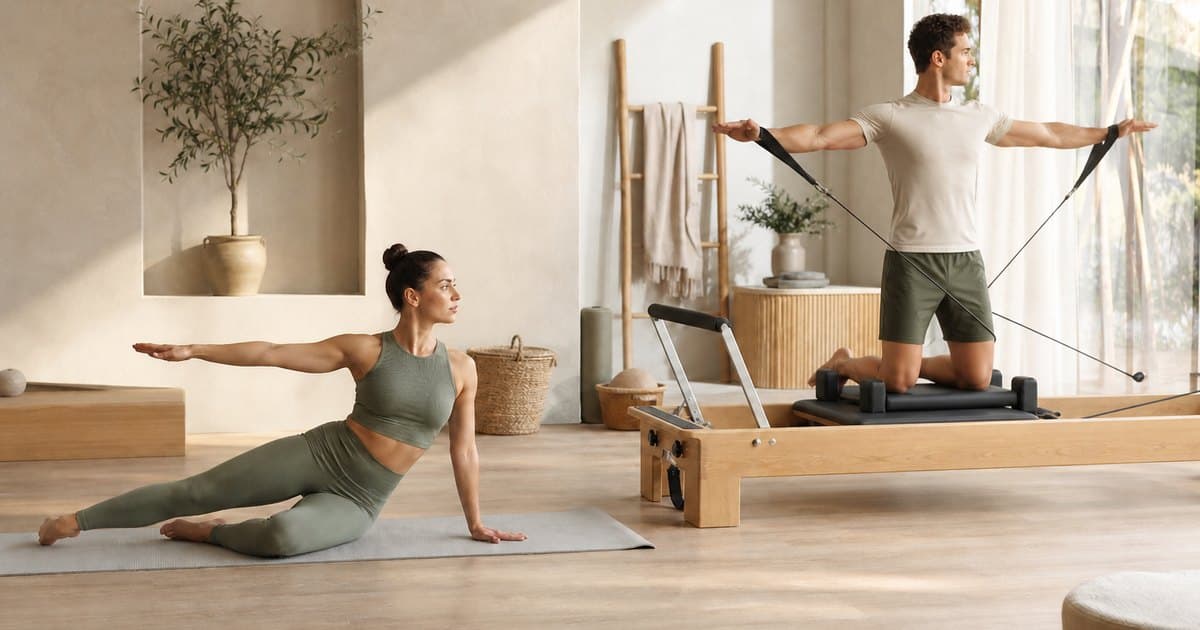
Matwork brings together the method's exercises performed on a mat. The system developed by Joseph Pilates was originally called Contrology and included both bodyweight work and apparatus.
In this variation, body weight and gravity provide the main resistance. Sequences and difficulty vary by class, with an emphasis on trunk control and movement quality.
Matwork classes are often enriched with "small props" such as the Magic Circle, the Fitball, or resistance bands to add variety or facilitate certain positions.
What is Pilates Reformer?
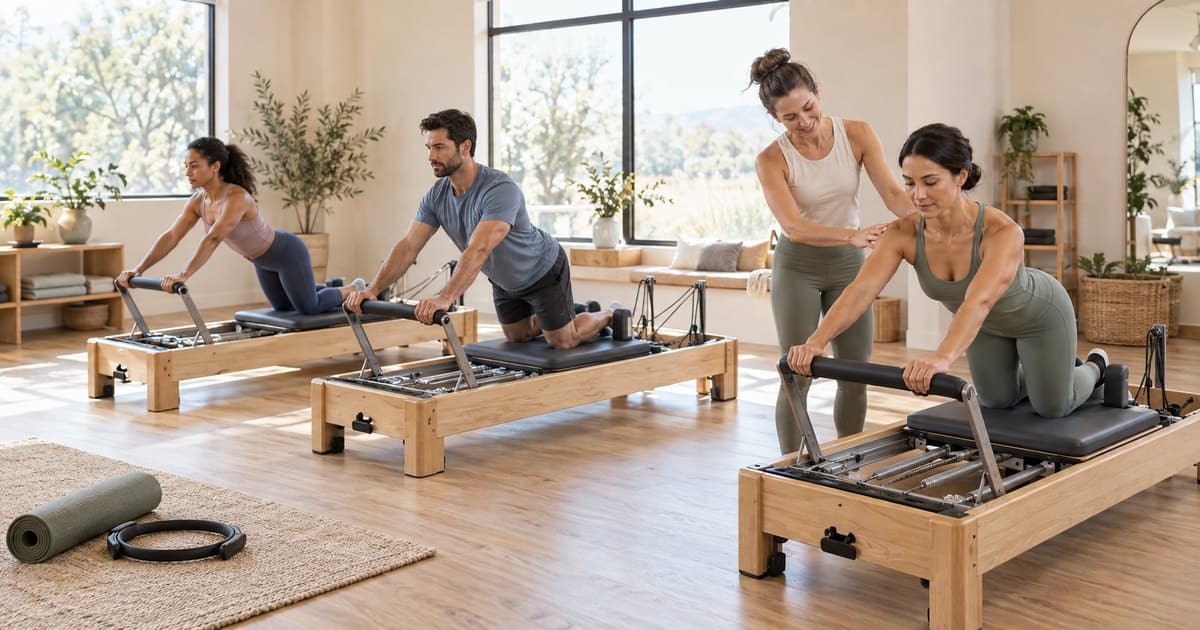
The Reformer is the most famous Pilates machine. It consists of a sliding carriage mounted on a frame, connected to a series of springs with varying tensions, hand/foot straps, and a footbar.
Unlike the mat, the Reformer's springs serve a dual purpose:
- Resistance: They make the exercise more intense to build strength.
- Assistance: in certain configurations, they can support part of the load and make an exercise more accessible. Spring settings and exercise selection should be guided by the instructor.
The 3 fundamental differences
To help you choose, here is a quick comparison of three practical aspects:
| Factor | Pilates Matwork | Pilates Reformer |
|---|---|---|
| Resistance | Your body weight and gravity | Adjustable springs offering both push and support |
| Learning Curve | Difficulty depends on exercises, leverage, and variations | Springs and carriage provide feedback, resistance, or assistance |
| Group Size | Varies by studio, room, and class format | Limited by the number of machines available |
Which one should a beginner choose?
There is no single best starting point for everyone. A beginner can start with either format when the class is suitable for their level and the instructor provides appropriate progressions.
In Matwork, the instructor can use cues, demonstrations, and variations to support control. On the Reformer, contact with the carriage, bar, and straps provides additional feedback, but the machine alone does not guarantee correct movement: setup and supervision still matter.
Matwork requires less equipment, so it is easier to find or practise outside a studio. Reformer work offers different options through spring settings and carriage movement.
Why try Pilates with single classes?
A single class can help you understand the format, studio, and instructor before considering a package or membership. Prices and terms vary by venue.
Through FlexDropin, you can search for Pilates studios near you and book a single drop-in class for Reformer or Matwork. This allows you to:
- Try the machine before committing.
- Meet the instructor and understand how they explain and adapt exercises.
- Alternate a Reformer session with a Matwork session to see which best meets your body's needs.
Choose flexibility, book your class, and discover the benefits of the Pilates method.